
Яхорина и Пале
Все трассы на одной карте
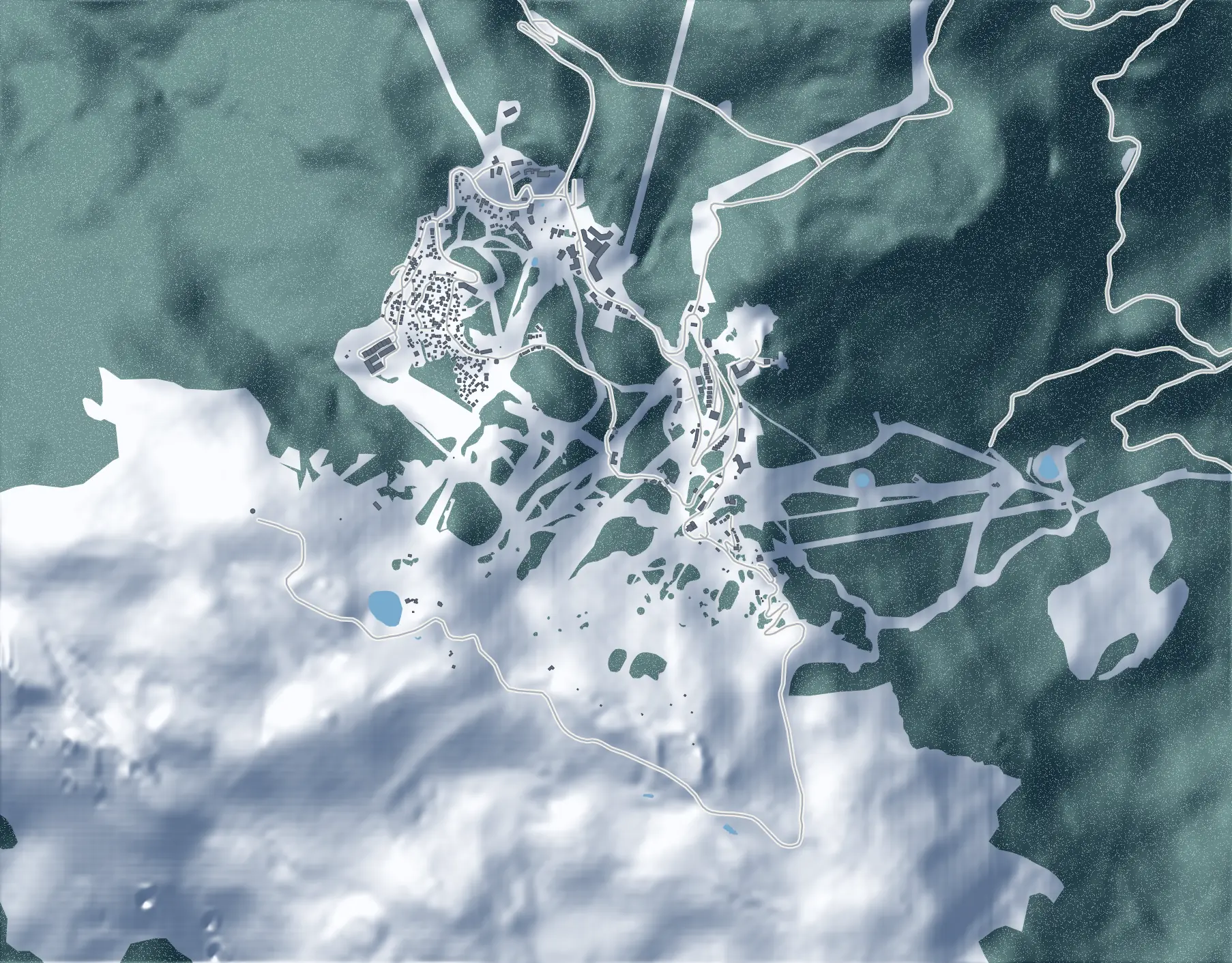
Настоящий рельеф Яхорины с трассами и подъёмниками. Скройте ненужные цвета или включите ночное катание, чтобы увидеть освещённые трассы.
About Jahorina
Jahorina lies in the central part of Bosnia and Herzegovina, in a chain of Dinaric mountains alongside Bjelašnica, Treskavica, Prenj, Čvrsnica and Zelengora. The massif is about thirty kilometres long, and its highest peak, Ogorjelica, rises to 1,916 metres.
From Sarajevo you reach Jahorina via Pale (28 km) or via Trebević (32 km), on asphalt roads that are cleared regularly in winter. Banja Luka is 200 km away, Belgrade 320 km and Zagreb 350 km, and all of these cities have international airports.
Nature has been generous to Jahorina, with ski terrain, springs and streams, forests and fragrant meadows, and landscapes crossed by hiking trails. No wonder many count it among the most beautiful mountains in Europe.
In 1984 Jahorina was a stage of the Sarajevo Winter Olympics, where the biggest names in world skiing raced on its slopes. It has since hosted many European and world competitions, and today it is one of the most popular winter resorts in the Balkans.
The Jahorina Olympic Centre has more than 20 kilometres of perfectly prepared runs. Three six-seater chairlifts, four ski lifts and two double chairlifts carry over 10,000 skiers every hour.
Jahorina's climate is noticeably different from other mountains in the region. Warm Mediterranean and cold continental air masses meet here, giving a pleasant, healthy climate in both winter and summer.
That climate also brings plenty of snow. Snow falls on around 85 days a year, and snow cover lasts an average of 175 days, from October to the end of May. It ranges from one to three metres deep, with an average depth of 106 cm from October to May. Many skiers describe the quality of Jahorina's snow as excellent.
The mountain's original name was Javorina, after the Heldreich's maple (lat. Acer heldreichii), for which this is the northernmost habitat. Huge old maples remain a natural attraction to this day. The name Jahorina took hold during Ottoman rule, when the sound V was often replaced by H. A women's choir and a mountaineering club from Pale, both called Javorina, keep the old name alive.

Slopes and lifts
Name and type | Base station altitude | Top station altitude | Vertical drop m | Capacity persons /~ | Length m | Ride time min |
|---|---|---|---|---|---|---|
Poljice ski lift | 1530 | 1670 | 140 | 850 | 450 | 3 |
Poljice six-seater chairlift | 1520 | 1884 | 364 | 2000 | 1550 | 6 |
Poljice two-seater chairlift | 1520 | 1884 | 364 | 1200 | 1550 | 10 |
Ogorjelica I six-seater chairlift | 1560 | 1880 | 320 | 2000 | 1351 | 5 |
Ogorjelica II two-seater chairlift | 1570 | 1889 | 319 | 1200 | 1250 | 9 |
Rajska dolina ski lift | 1644 | 1753 | 109 | 900 | 950 | 6 |
Olimpik ski lift | 1644 | 1840 | 196 | 900 | 950 | 6 |
Skočine six-seater chairlift | 1300 | 1668 | 368 | 2000 | 1311 | 5 |
Poljice baby ski lift | 1520 | 1527 | 7 | 180 | 100 | 2 |

Night skiing
Night skiing has become a favourite part of every stay on Jahorina. To the existing five kilometres of floodlit runs, the Jahorina Olympic Centre added another 3.5 km of new FIS-standard lighting, so a total of 8.5 km of runs is now ready for skiing under the stars.
The Poljice, Novak Đoković, Trnovo and Skočine runs are floodlit, as is the Poljice practice area for the youngest and less experienced skiers. In the evening the Poljice gondola, the Partizan gondola, the Trnovo and Skočine six-seaters and the lifts at the Poljice practice area all run. The Novak Đoković run, the most popular blue run on the mountain, is fully lit and ideal for anyone who wants to try night skiing for the first time. All of these runs are covered by artificial snowmaking.
Night skiing runs from 6 to 9 pm. Ski passes are sold at the Poljice and Partizan ticket offices, and you can check current prices on the official OC Jahorina website.

Pale
Pale is a university, cultural, sports and tourist centre with a strong focus on young people and education. Sport is part of everyday life here, and skiing is naturally the favourite. As in the past, Pale remains an important link between the Sarajevo valley and the Drina region.
The municipality covers 493 km² of distinctly mountainous terrain, from 624 m above sea level in the Miljacka canyon to 1,916 m on Ogorjelica. The town centre, at an average altitude of around 820 m, sits in a valley surrounded by Romanija, Gosina, Ozren, Trebević, Ravna Planina and Jahorina.
About 65% of the municipality is covered by mostly coniferous forest, so Pale rightly keeps its tradition as an air spa and a favourite day-trip destination. With Olympic Jahorina and Ravna Planina, their modern runs, lifts and gondolas, Pale is a true winter destination, and many places to stay combine modern comfort with the warmth of traditional mountain style.